

Key Takeaways
- Nearsightedness makes distant objects blurry, while close objects stay clear.
- It happens when the eye grows too long or the cornea curves too steeply.
- Children and adults can miss gradual vision changes without regular eye exams.
- Family history, screen time, and limited outdoor time can raise your risk.
- Glasses, contacts, and myopia control options can help manage nearsightedness.
Nearsightedness Explained in Simple Terms
You can read a book just fine, but a street sign halfway down the block looks like a blur. That experience is what nearsightedness, also known as myopia, feels like day to day. Our team at Total Vision Golden Hills works with families to catch these kinds of changes early, while management options are most effective.
Nearsightedness happens when the eye grows too long or the cornea curves too steeply, causing light to focus in front of the retina instead of directly on it. The result is clear vision up close and blurry vision at a distance. It’s a simple mechanical mismatch, but it has a real impact on how you move through the world.
Signs & Symptoms to Watch For
In Children
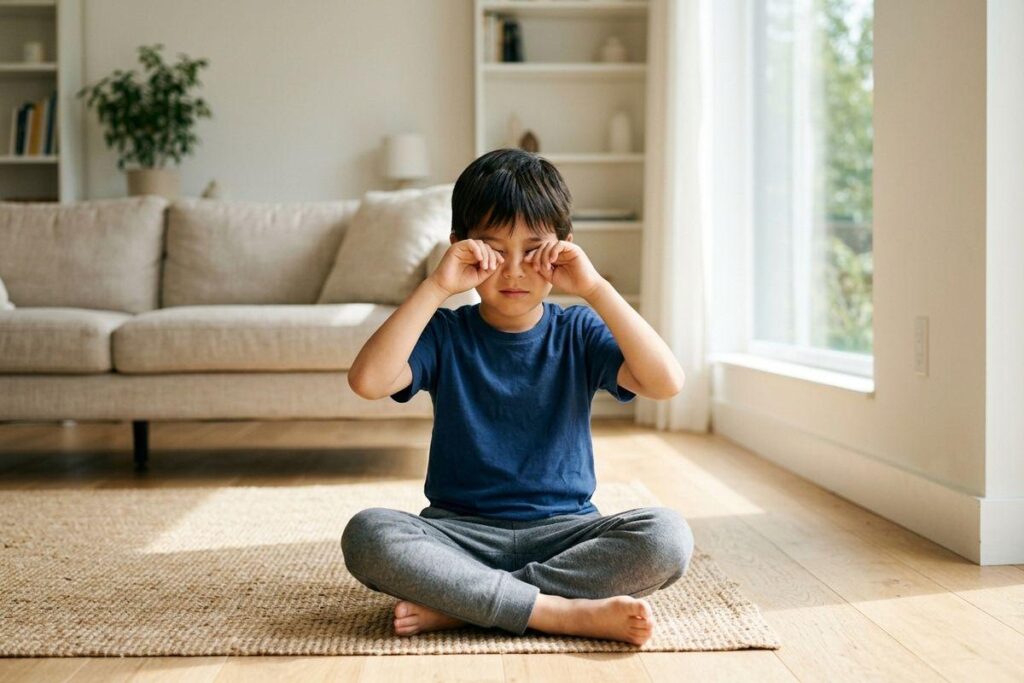
Kids rarely say, “I can’t see the board clearly.” They just adapt. That adaptation can look like squinting at the TV, sitting closer to screens than you’d expect, or rubbing their eyes frequently. These small habits are easy to chalk up to tiredness or inattention.
Watch for frequent blinking, complaints about headaches after school, and comments that the front of the classroom looks fuzzy. If a child seems less interested in outdoor activities or sports, that can sometimes trace back to not being able to see well at a distance. Children’s eye exams are designed to catch exactly these kinds of gradual shifts before they affect learning or daily life.
In Adults
While myopia tends to develop in children, it sometimes appears for adults as well. Street signs and store names may appear blurry at a distance, while night driving may become uncomfortable due to headlights and traffic signals looking hazy or smeared.
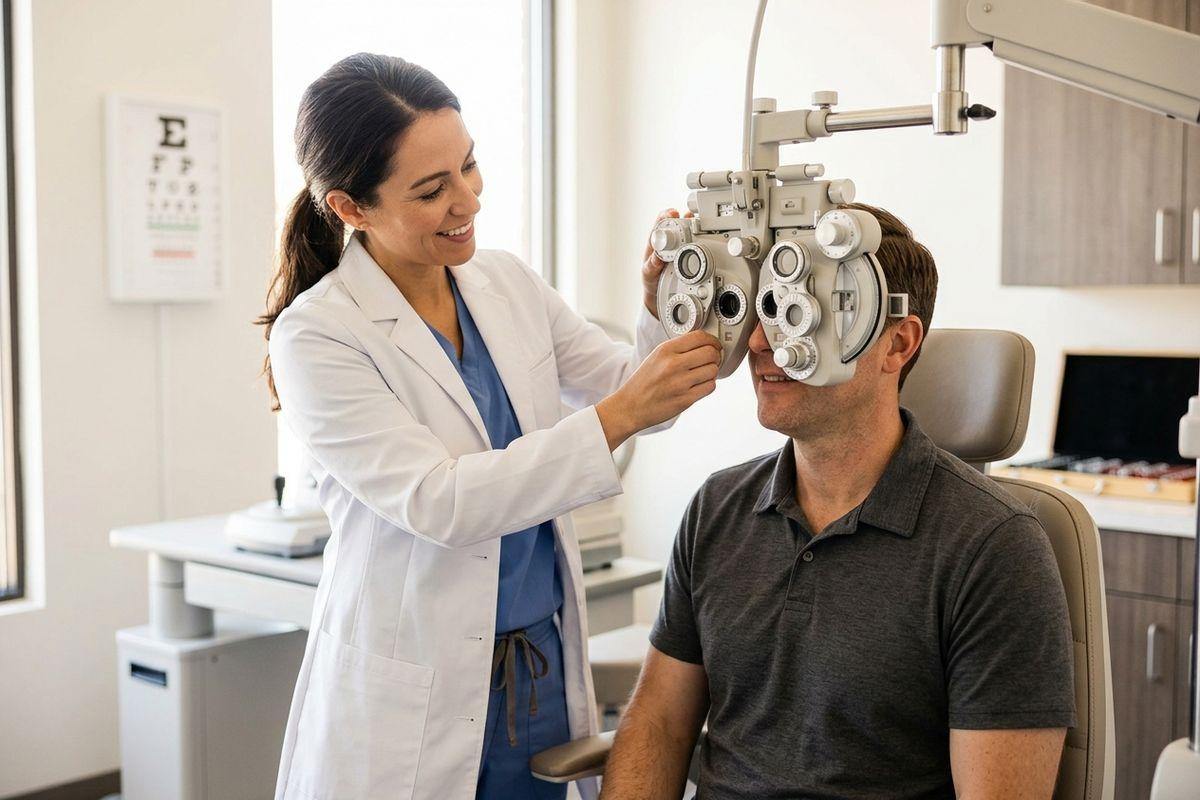
Headaches and eye strain after long days are also common. If you notice any of these symptoms, an eye exam for adults can give you a clear picture of what’s happening.
What Puts You at Risk for Nearsightedness
If one or both of your parents are nearsighted, your chances of developing it go up. That’s why it’s worth keeping an eye on your children’s vision as they grow.
Time spent on close-up tasks, like reading and screens, plays a role too. Research has linked limited outdoor time to faster progression of myopia in children. Natural light and the act of looking at objects in the distance seem to support healthy eye development in ways that indoor environments simply don’t replicate. You can read more about how screen time affects myopia and what that means for your family’s daily habits.
Nearsightedness vs. Other Vision Conditions
How Nearsightedness Differs from Farsightedness
Farsightedness works the other way around. Nearby objects appear blurry while things in the distance may stay clearer. The underlying cause is also reversed. A farsighted eye tends to be shorter than average rather than longer.
How Nearsightedness Differs from Astigmatism
Astigmatism is caused by an irregularly shaped cornea rather than an eye that’s too long, and it causes blurry vision at all distances. Astigmatism and myopia can and often do occur together, so a prescription for one doesn’t rule out the other.
Learning how astigmatism works can help you have a more informed conversation with your eye doctor at your next visit.
How an Eye Doctor in San Jose Can Help
Correction and Treatment Options
Glasses and contacts are the most straightforward way to bring distant objects back into focus. The right prescription can make a significant difference in how clearly and comfortably you see. Our team can walk you through options and find a fit that works for your lifestyle.
For children, it’s worth considering myopia control. While myopia control can’t reverse myopia, it does slow the rate at which the condition progresses over time, thereby protecting children’s future vision. Common options include specialty contact lenses and atropine drops.
Why Regular Eye Exams Matter
Vision changes gradually, which makes them easy to miss. Children don’t have the experience to know what normal vision is like, so they often assume that blurry vision is normal. Adults can adapt without realizing how much their vision has shifted.
- Early detection can help slow the progression of myopia in children.
- Routine exams catch changes before they affect school, work, or daily life.
- Regular visits support long-term eye health beyond just vision correction.
Our team at Total Vision Golden Hills can assess your family’s vision and help you understand what your options are. If you’re looking for an eye doctor in San Jose who takes a thorough, family-focused approach to eye care, reach out to schedule a comprehensive eye exam today.