

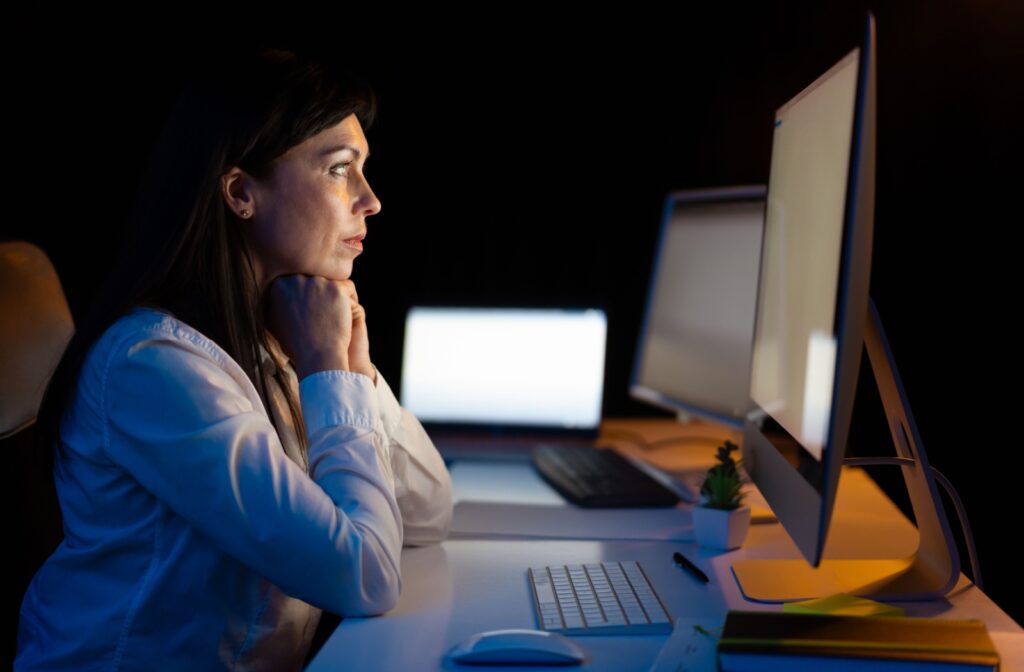
From work computers and school tablets to the smartphones in our pockets, screens are a constant part of modern life. While these devices connect us and make tasks easier, they also demand a lot from our eyes. It’s common to finish a long day of screen use and notice tired, uncomfortable eyes—which is why it’s important to manage digital eye strain.
Protecting your vision in a digital world involves a combination of mindful habits, an ergonomic environment, and consistent, professional eye care. You can take simple, proactive steps every day to reduce digital eye strain and support your long-term eye health. It all starts with understanding how screens affect your eyes and what you can do about it.
Why Screens Affect Your Eyes
Signs of Digital Eye Strain
When you focus on a screen for hours, you might notice a collection of symptoms called computer vision syndrome or digital eye strain. Your eyes are working hard to process information, and they can get tired just like any other muscle. This discomfort is a signal from your body to take a break and make a change.
Some common signs of digital eye strain include:
- Blurred vision
- Headaches
- Eye fatigue or discomfort
- Double vision
- Light sensitivity
How Screen Time Impacts Eye Health
When your eyes are focused on a screen, they have to constantly focus, which puts a strain on your focusing muscles. We also tend to blink much less when staring at a screen, which can lead to dry, irritated eyes.
Simple Rules to Rest Your Eyes
Practice the 20-20-20 Rule
One of the most effective ways to combat eye fatigue is the 20-20-20 rule. Every 20 minutes, take a 20-second break to look at something at least 20 feet away. This simple action allows your eye muscles to relax from the constant close-up focus of screen work.
To help turn the 20-20-20 rule into a habit, you can set a recurring timer on your phone or computer.
More Ways to Give Your Eyes a Break
Beyond the 20-20-20 rule, you should also give your eyes more substantial rests throughout the day. Get up from your desk every hour to stretch and move around—this benefits both your eyes and the rest of your body. You can also make a conscious effort to blink more often to keep your eyes lubricated.
Adjust Your Workspace & Environment
Set Up Your Screen & Chair
Your physical setup plays a large role in how comfortable your eyes are. Position your computer screen about an arm’s length away from your face, with the top of the screen at or slightly below eye level. This downward gaze is a more natural and relaxed position for your eyes.
Adjust your chair so your feet can rest flat on the floor, and consider increasing the font size on your screen. Making text larger can reduce the need to lean in or squint. Small ergonomic adjustments can add up to significant relief.
Control the Light in Your Room
Glare from windows or harsh overhead lighting can be a major source of eye strain. If possible, position your desk so that bright light sources are to the side rather than in front of or behind your screen. You can use blinds or curtains to manage natural light.
It’s also helpful to adjust your screen’s brightness to match the level of light in the room. A screen that is much brighter than its surroundings can feel like you’re staring into a lightbulb. Many devices have settings that can automatically adjust brightness for you.
You may also want to consider lens coatings to reduce reflections from your screen.

A Look at Blue Light Glasses
How Blue Light Lenses Work
You’ve probably heard about blue light, which is part of the visible light spectrum emitted by the sun and our digital screens. Blue light glasses have a coating designed to filter or block a portion of this light. The idea is to reduce the amount of blue light that passes through the lens to your eyes.
When to Consider Them
There is some evidence that exposure to blue light in the evening can disrupt our sleeping patterns. Blue light glasses may therefore be helpful for people who use devices later in the day.
The Importance of Regular Eye Exams
Why Prescriptions Have Expiration Dates
Your eyesight can change gradually over time, often without you noticing right away. A prescription has an expiration date because an old, inaccurate prescription can force your eyes to work harder to see clearly. This can lead to headaches, fatigue, and the very strain you’re trying to avoid.
Keeping your prescription current is a key part of good eye care. Learning how to read eyeglass prescriptions can also help you understand these changes. Regular exams help confirm that your glasses or contact lenses are providing the correct level of vision correction, ensuring you see as clearly and comfortably as possible.
Keep Your Vision & Eye Health in Check
An eye exam is about much more than just updating your prescription. In fact, a comprehensive eye exam can detect over 270 different health conditions! Regular checkups help your optometrist identify early signs of potential issues, thereby allowing for more effective treatment.
Eye Care Tips for the Whole Family
Screen Time for Children & Teens
Children’s eyes are still developing, making healthy vision habits particularly important. Balancing screen time with plenty of outdoor activities can support healthy eye growth and development. For children with myopia ( nearsightedness), proper vision correction is also a key factor in managing how their eyes grow.
Traditional single vision lenses correct central vision but can cause peripheral light to focus behind the retina. This can signal the eye to grow longer, which may increase nearsightedness over time. An eye doctor can discuss different approaches, including several tips to slow myopia progression.
Habits for Adults & Seniors
The same rules of rest breaks and proper ergonomics apply to adults of all ages. As we get older, age-related vision changes become more common, making adult and senior eye exams an important part of your overall health care.
At Total Vision Golden Hills, our team is here to provide quality eye care for every member of your family. We can find solutions for your vision and eye health, helping you enjoy clear and comfortable eyesight for years to come. Schedule an appointment with our team in San Jose to take the next step in protecting your vision.